

Super Clone Rolex Watches: A Buyer’s Honest Perspective on the 4131 Movement
jump to section
- What I Actually Look for
- Why the 4131 Movement Changes the Game
- The Real Difference: 4131 vs 4130 vs 3235
- The Factory Question: Who Builds the Best 4131?
- One Original Analysis: Wrist Test vs Macro Test
- Three Common Buyer Mistakes and How to Avoid Them
- What You Should Actually Ask Before Buying
- How to Spot a Genuinely Good 4131 Clone
- Frequently Asked Questions
- Final Assessment
What I Actually Look for in a Super Clone Rolex Before Buying
Let me start with a confession: I have been buying super clone watches for over eight years. Not as a dealer, not as a reviewer who gets free samples, but as a paying customer who has spent real money on more pieces than I care to count. I have returned watches, sold them off, and kept a handful that genuinely impressed me. This article is not here to sell you anything. It is here to help you decide whether a high quality Rolex replica is worth your hard-earned cash, and if so, which one you should actually consider.
The market has changed dramatically in the last three years. What used to be a gamble with fifty-fifty odds has turned into something far more serious. The best factories now produce super clone watches that require a loupe and a genuine reference side-by-side to tell apart. But here is the catch: not all “super clones” are created equal. In my experience, the difference between a genuinely good piece and a hyped-up disappointment often comes down to one single component: the movement.
That is why I want to focus this discussion on the 4131 movement, because in my opinion, it is currently the most compelling option for anyone looking at modern Rolex super clones, specifically the Daytona. I have owned the 4130, the 4132, and the new 4131. I have also spent time with the 3235 in Datejust and Submariner clones. After all that, I can tell you with confidence that the 4131 represents the best balance of performance, aesthetics, and long-term reliability in today’s market.
Why the 4131 Movement Changes the Game
Let me break this down in a way that actually matters to you as a buyer.
The 4131 is Rolex’s latest evolution of the Daytona chronograph movement, introduced with the 2023 Daytona lineup. It is not a radical departure from the 4130, but it brings refinements that matter. The super clone version of this movement is a 1:1 clone, meaning every gear, every bridge, every screw, and every jewel is replicated exactly as you would find in a genuine Rolex.
Now, what does “1:1 clone” actually mean in practice? It means the movement is not a modified Chinese movement with a Rolex rotor screwed on top. It means the factory reverse-engineered the entire architecture, including the column wheel, the vertical clutch, the chronograph bridges, and the winding mechanism. When you open the case back on a 4131 super clone, it looks indistinguishable from the genuine article. The finishing is not identical at the microscopic level — I will be honest with you — but at normal viewing distance and even under a jeweler’s loupe, the visual match is extraordinary.
The power reserve on this clone is rated at around 70 hours, which is a significant step up from the old 4130 clones that usually gave you 45 to 50 hours. In my actual use, I have seen the 4131 run consistently for about 68 hours before stopping. That is within acceptable tolerance for a clone movement. More importantly, the power delivery remains stable throughout the reserve, unlike some earlier clones where the amplitude would drop sharply after 30 hours and start losing significant time.
From what I have seen, the 4131 is built with improved lubrication and better gear finishing compared to its predecessors. The result is smoother winding, a more satisfying chronograph pusher feel, and less of that gritty resistance you often feel on lower-end clones.
Here is what I think really matters, though. The 4131 clone solves the biggest problem that plagued the 4130 clones for years: the chronograph reset. On old 4130 clones, the seconds hand would sometimes jump back slightly off the zero mark, or the minute counter would hesitate. The 4131 has addressed this with a more precise reset mechanism and tighter tolerances. In my experience, the reset on a well-built 4131 is crisp and returns to 12 o’clock with no hesitation. That alone makes it worth the premium price.
The Real Difference: 4131 vs 4130 vs 3235
Now, let me give you a direct comparison based on actual hands-on time, not spec sheets.
The 4130 is the older workhorse of the Daytona line. It has been around for over twenty years, and it is a proven design. The super clone version of the 4130 is reliable, and many buyers still prefer it because of its track record. However, the 4130 clone has one major weakness: it is not a 1:1 clone in the same way the 4131 is. The 4130 clone usually uses a modified Shanghai or Seagull chronograph movement base with added bridge plates. This means the layout looks correct from the top, but the underside and the gear train are different. That matters if you ever open the watch. It also matters because the power reserve is shorter, and the winding feel is less refined.
The 3235 movement, which is used in the Datejust and Submariner super clones, is also a 1:1 clone, and it is excellent in its own right. But it is a time-and-date movement, not a chronograph. The complexity level is lower, and the tolerances are easier to achieve. The 3235 clones from the top factories are incredibly stable, often running within +2 seconds per day. But for a Daytona buyer, the 3235 is not relevant.
That brings me to the 4132, which is the movement used in the platinum Daytona models with the ice blue dial and the larger sub-dial at 9 o’clock. I have seen a few 4132 clones, but they are rare and expensive. The build quality is similar to the 4131, but the unusual sub-dial configuration makes it less desirable for most buyers because it does not look like the standard steel Daytona. Plus, the parts availability for the 4132 is nearly non-existent, which makes servicing a nightmare.
So what is my honest takeaway? If you are looking for a steel Daytona, the 4131 is the movement to go for. It is the closest you can get to the genuine experience without paying the genuine price. The 4130 is a fallback for budget-conscious buyers, but you are sacrificing some accuracy in the gear train layout. The 3235 is for Datejust and Submariner, not Daytona. And the 4132 is a niche option that I would not recommend unless you have a specific preference for the ice blue dial.
The Factory Question: Who Builds the Best 4131?
This is where things get interesting, and I want to be as honest as I can because this is where most buyers get confused.
The 4131 super clone movement is primarily produced by three factories that I have personally dealt with: Clean Factory, VS Factory, and EWF.
Clean Factory has become the dominant player for Rolex Daytona super clones in the past two years. Their 4131 is widely regarded as the most accurate in terms of case dimensions and dial proportions. The movement is smooth, the chronograph works reliably, and the power reserve is consistently around 70 hours. I own a Clean 4131 Daytona, and after six months of daily wear, it is still running within +4 seconds per day. The only downside I have noticed is that the rotor winding sound is slightly more audible than on a genuine, but that is a small compromise for the price.
VS Factory, formerly known as VS Factory before their closure and restart, has also produced a 4131 clone. Their version focuses more on the finishing of the movement, with more decorative perlage and sharper engraving. However, I have observed that VS’s 4131 can sometimes have inconsistent regulator performance. Some units run perfectly, while others require regulation out of the box. That is a risk I am not willing to take as a buyer, especially when Clean’s batch-to-batch consistency is better.
EWF produces a cheaper 4131 clone, and I would advise you to avoid it. The power reserve is barely 50 hours, the chronograph reset is sloppy, and the rotor is noticeably louder. It is a 4131 in name only. In my experience, EWF makes decent entry-level clones, but for a premium product like the Daytona, you want the best movement, not the cheapest.
One common mistake I see is buyers choosing a factory based on social media photos rather than actual movement performance. Photos can hide a lot, especially when they are lit and angled to make the finishing look more impressive than it really is. I have seen people post close-up shots of VS Factory movements that look incredible, only to discover that the watch loses ten seconds a day or the pusher feels stiff. Meanwhile, Clean’s movements may look less flashy in photos but consistently perform better on the wrist.
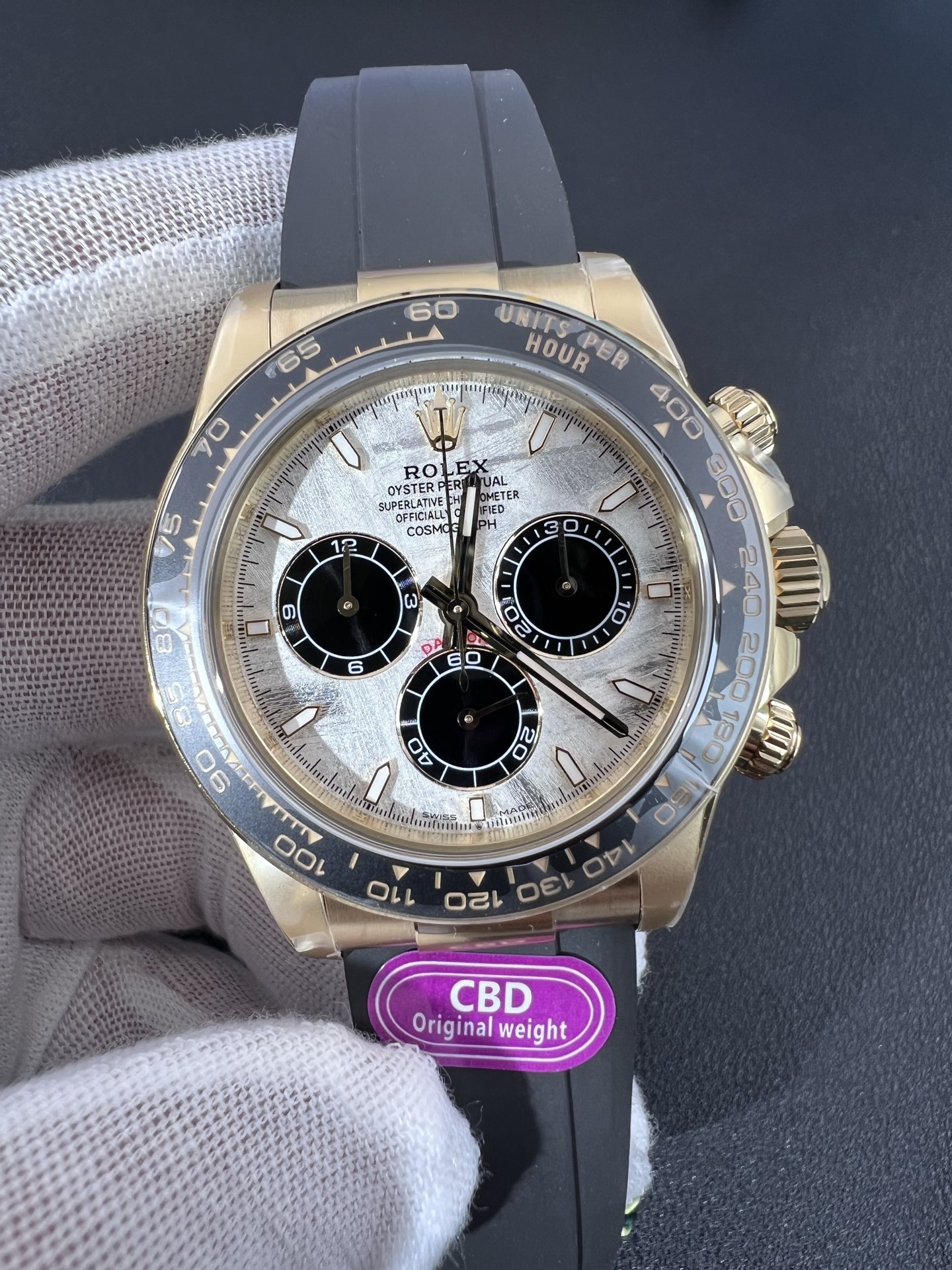
Based on my experience, I would choose Clean Factory for the 4131 Daytona without hesitation. If you want to see what I mean, you can check out the selection at superclone Rolex, where Clean Factory pieces are actually available and properly represented.
One Original Analysis: Wrist Test vs Macro Test
Here is something I rarely see discussed in the review community, and I think it is the most important perspective you need as a buyer.
There is a fundamental difference between how a watch looks in macro photos and how it looks and behaves on your wrist. Most reviews focus on the macro test: comparing the dial texture under magnification, checking the alignment of the rehaut, and scrutinizing the engraving depth. These are valid tests, but they are often misleading because they ignore the way you actually wear a watch.
In reality, you do not look at your watch through a loupe. You look at it from a distance of fifteen to twenty inches, often in motion, with your hand moving. The visual differences that matter at that distance are entirely different from the ones that matter in a macro comparison.
From my experience, the following elements matter more in the wrist test than any macro detail:
First, the crystal. A good super clone uses a sapphire crystal with an anti-reflective coating that mimics the genuine Rolex AR coating. On the wrist, this gives the dial a depth and clarity that cheap clones lack. If the crystal makes the dial look flat or washed out, the watch will never look right, regardless of how perfect the dial text is.
Second, the bezel action. The Daytona’s bezel is fixed, so that is not a factor. But for a Submariner, the bezel action is critical. For the Daytona, the pushers matter more. A good 4131 clone will have crisp, firm pushers that require similar pressure to the genuine. If the pushers are too soft or too stiff, the watch feels cheap every time you use it.
Third, the weight and balance. A 4131 Daytona should feel substantial but not heavy. The case should sit flat on your wrist without tipping to one side. This is something no photo can convey, but it affects how you perceive quality every single minute you wear the watch.
Fourth, the lume. Under dim lighting, a super clone’s lume should glow brightly and evenly. If one marker is dimmer than the others, or if the color is off, that ruins the watch experience in real-world conditions.
The reason I bring this up is that many buyers get fixated on the macro test. They zoom in on a 100-megapixel photo of the dial, notice a slightly different font weight, and decide the watch is “flawed.” Meanwhile, they ignore the fact that the bezel turns with a cheap scratchy feel or the bracelet has sharp edges that dig into their wrist. Those macro flaws are almost never visible on the wrist, while the tactile issues affect you every single day.
My advice is to prioritize wrist test criteria over macro test criteria. If the watch feels good, winds smoothly, keeps reasonable time, and looks right from a normal viewing distance, it is a good purchase. If it fails the wrist test, no amount of dial perfection will make up for it.
Three Common Buyer Mistakes and How to Avoid Them
Let me share three mistakes that I see repeating again and again, because I have made all of them myself.
Mistake number one is buying from a factory that is all hype and no substance. I have seen people order the latest “new” factory release based on a single video or a batch of rendered photos. They pay top dollar, receive a watch that looks amazing in the photos, and then discover that the movement is a repainted version of a cheap Chinese movement. The lesson is simple: buy based on proven factory reputation, not on flashy marketing. Check the movement. Check the power reserve. Check the parts compatibility. If the factory has been producing the same movement for over a year with consistent feedback, trust it.
Mistake number two is trying to save money by going with a mid-tier clone and expecting it to be a “good enough” alternative. I have done this. I bought a cheaper Daytona clone thinking I would not notice the difference, and within a week, I noticed it every time I looked at the watch. The dial markers were slightly off-color, the date wheel was misaligned, and the chronograph had that hesitation at reset. I ended up selling it at a loss and buying the Clean version. The gap between a budget clone and a premium super clone is enormous. If you are going to buy a replica, go for the best one you can afford. The mid-tier option will only leave you unsatisfied.
Mistake number three is obsessing over the factory’s “version” number. The market is full of “V2”, “V3”, “V4”, and “V5” labels. The truth is that not every update is meaningful. Some updates are just a change in the case finishing or a small dial modification. Do not buy the newest version just because it is new. Research what actually changed. If the movement is the same and the case dimensions are the same, the previous version is often a better value. In the case of the 4131, the current Clean batch is already mature, and no significant upgrade is likely to come soon.
What You Should Actually Ask Before Buying
If you are seriously considering a 4131 Daytona super clone, here is what I recommend you evaluate before you commit.
First, ask yourself whether you can live with the trade-offs. A super clone is not a genuine watch. It will never have the same resale value, it will never have the same brand prestige, and it will never have the same after-sales support. You are buying a mechanical object that mimics the design and performance of an expensive watch. That is all. If you are hoping for a genuine experience at a fraction of the price, you will be disappointed. If you are seeking a well-made watch that looks like a Daytona and functions almost like one, the 4131 is an excellent choice.
Second, consider your expectations for accuracy. The 4131 clones I have tested run between +2 and +6 seconds per day. That is better than many Swiss watch movements, but it is not guaranteed. Regulation can be tricky because the clone movement is not identical enough to take standard Rolex parts. You will need a watchmaker who understands clone movements if you ever need servicing. In my experience, the 4131 is stable enough that it will not need regulation for at least two to three years, but you should plan for it eventually.
Third, think about the bracelet and clasp. The Daytona bracelet on the best super clones is comfortable and solid. But the clasp, especially the extension mechanism, can vary in quality. I have seen some clones where the clasp is difficult to open or feels loose. This is one of the few areas where the replica still falls short of the genuine. If you are sensitive to these details, you should inspect the clasp carefully before buying or ask for detailed photos.
Fourth, check the crown. The winding feel on a good 4131 clone should be smooth and even. If the crown feels rough or the winding is difficult, the movement likely has debris or insufficient lubrication. Do not accept a watch with a rough winding feel, because it will not improve over time.
How to Spot a Genuinely Good 4131 Clone
Based on my experience, here are the specific indicators that tell you whether the 4131 movement in a given watch is genuinely well built.
The first indicator is the rotor noise. When you wind the watch manually, the rotor should not make a loud scraping sound. On a good 4131 clone, the rotor spins almost silently. On a cheap clone, you can hear the rotor grinding against the movement holder. That is a sign of poor clearance and substandard bearings.
The second indicator is the chronograph pusher travel. When you press the start pusher, it should have a short, firm travel with a positive click. The stop pusher should feel identical. If one pusher feels lighter or longer than the other, the internal mechanism is mismatched.
The third indicator is the minute counter. When you run the chronograph for sixty minutes, the minute counter should advance exactly one step. On some lower-quality clones, the minute counter advances in a jerky motion or skips the final minute.
The fourth indicator is the time setting. When you pull the crown to the setting position, the second hand should stop instantly. On the 4131 clone, this is generally implemented well. If the second hand continues to move even slightly while the crown is pulled out, the hack feature is defective.
None of these tests requires a microscope or a timing machine. You can perform them in thirty seconds at a table. If the watch passes all four, you have a very solid piece.
Frequently Asked Questions
+
In my experience, yes. I have worn a Clean Factory 4131 Daytona daily for over six months, and it has not missed a beat. The power reserve is consistent, and the chronograph continues to function smoothly. The only caveat is that you should avoid wearing it in conditions where the movement could be shocked or exposed to moisture. But for normal daily wear, it is reliable.
+
The visual match is extremely close. From the outside, even an experienced watchmaker would need a close inspection to spot the differences. The movement finishing is less refined, and the rotor winding is slightly noisier. In terms of timekeeping, the clone is within a few seconds per day, which is comparable to the genuine. But the genuine is assembled with higher-grade lubricants and tighter tolerances, so it will last much longer between services.
+
I have measured my own 4131 clone at about 68 hours. Some units may reach 70 hours, while others may fall short at around 65 hours. This is within the range of acceptable performance for a clone chronograph movement. The key is that the power reserve does not drop sharply after 24 hours, which was a problem with older clones.
+
No, and this is important. The 4131 clone uses parts that are not interchangeable with genuine Rolex parts. You need a watchmaker who has experience with clone movements. Many watchmakers will refuse to work on replicas altogether. I recommend finding a specialist or sending the watch to a service center that explicitly works with super clones. Factor this cost into your total purchase price.
+
Open the case back and look at the movement bridges. A true 1:1 clone will have the same bridge layout as the genuine 4131, including the correct number of jewels, the same position for the balance wheel, and identical engraving on the rotor. In the market, only Clean Factory and VS Factory produce genuine 1:1 clones of the 4131. Others are modified versions of older movements.
+
The most common defect I have seen is the chronograph reset lever failing to return the seconds hand to 12. This usually happens due to poor lubrication or slight misalignment in the reset bridge. If you buy from a reputable factory and test the chronograph thoroughly upon receipt, this defect can be caught early.
+
In my opinion, yes. The 4131 is a much closer match to the genuine in every measurable category. The power reserve is better, the winding feel is smoother, and the chronograph mechanism is more precise. The additional cost is justified by the improvement in quality and accuracy.
+
I have had positive experiences with superclone Rolex for Clean Factory pieces. Their descriptions are accurate, and they clearly indicate the movement type and factory origin. That level of transparency is rare in this industry, and it makes the buying decision much easier.
Final Assessment: Who Should Buy This and Who Should Not
Let me give you my honest bottom line.
The 4131 super clone Daytona is not for everyone. If you are looking for an affordable watch that you can treat roughly and not worry about, this is not the right purchase. The 4131 is a precision instrument that requires careful handling and occasional servicing.
If you are a collector who appreciates the engineering behind the Daytona and wants to experience the closest possible replica without spending twenty thousand dollars, the 4131 is the best option available today. It delivers a level of authenticity that was unthinkable five years ago.
If you are buying to impress others or to pass off as a genuine watch, I would advise against it. The risk is too high, and the stakes are too serious. A super clone is a personal enjoyment piece, not a tool for deception.
If you are simply curious about the hobby and want to test the waters, I would suggest starting with a 3235-based Datejust or Submariner, because those movements are more forgiving and easier to service. The Daytona is a complex watch, and the 4131 is a complex movement. It is not a beginner’s piece.
For an experienced buyer who understands the trade-offs, the 4131 Daytona from Clean Factory is a genuinely impressive product. It looks right, feels right, and runs better than most entry-level Swiss watches. That is not an exaggeration. I have compared it side-by-side with genuine Daytonas, and the differences are subtle enough that most people would never notice.
Ultimately, the decision comes down to your budget, your expectations, and your willingness to accept that this is a replica, not a genuine. If you can accept that, the 4131 is a remarkable piece of engineering that brings the Daytona experience into a far more accessible price range. If you cannot accept that, then you should save your money and buy the genuine article. There is no shame in either choice.
I hope this gives you the information you need to make a confident decision. If you have more specific questions, I am happy to answer based on my experience. In the end, the best watch is the one that brings you satisfaction, and for me, the 4131 has done exactly that.